Woking High Street office cleaning options: a practical guide for busy workplaces
If you manage an office near Woking High Street, you already know cleanliness is not just about appearances. It affects how clients feel when they walk in, how staff settle into the day, and even how smoothly the week runs when bins overflow or a meeting room looks a bit tired. The good news is that Woking High Street office cleaning options are flexible. You can choose a light regular service, a more thorough deep clean, or a tailored package that deals with carpets, windows, hard floors, and all the little touchpoints people notice the moment they step inside.
This guide breaks down the real choices, how they work, what to ask for, and where businesses often get caught out. If you are comparing providers, planning a cleaner schedule, or trying to make sense of what is actually worth paying for, you will find a grounded answer here.
Table of Contents
- Why Woking High Street office cleaning options Matters
- How Woking High Street office cleaning options Works
- Key Benefits and Practical Advantages
- Who This Is For and When It Makes Sense
- Step-by-Step Guidance
- Expert Tips for Better Results
- Common Mistakes to Avoid
- Tools, Resources and Recommendations
- Law, Compliance, Standards, or Best Practice
- Options, Methods, or Comparison Table
- Case Study or Real-World Example
- Practical Checklist
- Conclusion
- Frequently Asked Questions
Why Woking High Street office cleaning options Matters
Woking High Street has the kind of everyday office traffic that makes cleaning a bit more complicated than people expect. You may have clients arriving between train connections, staff popping out for lunch, couriers coming and going, and shared spaces that pick up fingerprints, crumbs, and muddy shoe marks faster than anyone would like. That is why the right office cleaning setup matters so much: it keeps the workplace presentable without making the building feel like a construction site every evening.
There is also a practical side. A well-kept office tends to need fewer emergency fixes. Spills are dealt with before they stain. Kitchens stay usable. Washrooms do not become a source of complaint. And if you are in a client-facing business, first impressions are doing a lot of heavy lifting for you. To be fair, a polished reception area can make a bigger difference than a new chair ever will.
The phrase Woking High Street office cleaning options covers more than one service model. It can mean routine daily cleaning, a weekly schedule, a one-off refresh, specialist carpet care, or a deeper clean before a new tenant moves in. Knowing the difference helps you avoid overbuying services you do not need, or underbuying and then scrambling when the place starts to look worn.
For businesses comparing cleaning providers, trust matters as much as price. You want reliability, insurance, clear communication, and a cleaning plan that fits your operating hours. If you are looking for a broader business-facing service, commercial cleaning is often the right starting point for understanding how a workplace can be supported in a structured way.
How Woking High Street office cleaning options Works
Most office cleaning arrangements begin with a short walkthrough or a phone consultation. The aim is simple: identify the rooms, surfaces, traffic patterns, and problem areas that need attention. A good provider will ask what time the office is occupied, which spaces are shared, and whether there are any sensitive areas such as boardrooms, server rooms, or client reception spaces. That bit is not glamorous, but it saves hassle later.
From there, the service is usually shaped into a routine. In many offices, that means a daily or several-times-a-week clean of bins, desks, touchpoints, washrooms, and kitchen areas. Other spaces need less frequent attention. Carpets might be cleaned periodically, windows might be scheduled separately, and hard floors may need specialist treatment now and then. Offices are not all the same, obviously. A solicitor's suite, a creative studio, and a small consultancy all wear dirt differently.
Cleaning can happen before staff arrive, after they leave, or at quieter times during the day. The timing depends on access, noise, and the need to avoid disruption. Around Woking High Street, that can matter quite a lot if people are coming in by train or parking spaces are limited and delivery windows are tight.
Some businesses want a simple tidy-and-sanitize routine. Others need a more detailed approach. In those cases, a deep clean can be added to the regular plan. If an office has built up grime in corners, neglected skirting boards, or tired communal areas, deep cleaning is a sensible option because it goes beyond the surface and resets the space properly.
And then there are special circumstances. A refurbishment, for example, often leaves dust where you would not expect it. If that is the situation, after builders cleaning can be more useful than a standard office tidy. Different problem, different tool. Sounds obvious, but plenty of people mix them up.
Key Benefits and Practical Advantages
There is a very ordinary but important reason businesses invest in office cleaning: it keeps the day moving. A clean workplace is easier to use, easier to manage, and less likely to produce those awkward little complaints nobody wants to deal with on a Monday morning.
- Better first impressions: reception areas, meeting rooms, and washrooms set the tone for visitors.
- Reduced day-to-day friction: full bins, sticky counters, and smudged glass create unnecessary noise in the working day.
- Longer-lasting surfaces: regular care helps protect carpets, flooring, and upholstery from premature wear.
- Improved consistency: a predictable schedule means problems are spotted before they grow.
- Less disruption: when cleaning is planned properly, staff are not constantly working around clutter or wet floors.
One of the less talked-about benefits is morale. People tend to treat a well-kept workplace with a little more care. Not dramatically, and not overnight, but enough to matter. If a kitchen is clean and the desks are not surrounded by yesterday's cups, the whole office tends to feel more settled.
There is a practical cost angle too. Routine cleaning is usually more efficient than waiting until a space needs a rescue job. A small stain removed early is easier to deal with than a carpet marked for months. A regular clean of high-touch areas is easier than trying to bring everything back to life after it has been neglected. That is just common sense, really.
For premises with mixed flooring or repeated foot traffic, specialist support can help. A package combining hard floor cleaning and steam carpet cleaning can make a big difference in offices where corridors and entrance areas take the brunt of the wear.
Who This Is For and When It Makes Sense
Office cleaning is not only for large corporate floors. In fact, many of the most common Woking High Street office cleaning options are designed for smaller or mid-sized workplaces that need dependable support without a complicated contract. If you have a reception desk, a kitchen, a washroom, and a handful of desks, you already have the kind of space that benefits from regular professional care.
This is especially useful if you are:
- a professional services firm with client visits;
- a shared office or coworking space;
- a retail office with customer-facing back-of-house areas;
- a small team that has outgrown ad hoc cleaning;
- a landlord or managing agent preparing a unit between occupiers;
- a business that has had refurbishment work or a seasonal spike in footfall.
It also makes sense when the office has specific problems. Maybe the carpets are starting to look a little tired. Maybe the kitchen smells faintly of yesterday's lunches. Maybe the windows facing the street are fine in winter but show every rain mark in spring. That is all normal. Offices age in layers, and you often notice it in tiny ways before you see it all at once.
If your workplace also shares hallways, stairwells, or entry points with other tenants, you may want to look at communal area cleaning as part of the setup. Shared spaces can be the first thing people see, and they are often the first thing to slip.
For businesses with tighter operating windows, flexibility matters. Not every office needs a five-day-a-week service. Some are better suited to regular cleaning a few times a week, with additional add-ons when needed. Truth be told, the best option is usually the one that fits the rhythm of the office rather than forcing the office to fit the cleaner.
Step-by-Step Guidance
Choosing the right service becomes much easier if you break it into small decisions. Here is a practical way to do that.
- List the spaces that matter most. Reception, meeting rooms, workstations, kitchens, toilets, stairwells, store cupboards, and any client-facing areas.
- Decide what needs frequent attention. Bins and washrooms are usually daily priorities. Carpets and windows are often less frequent.
- Think about access. Can a cleaner arrive before opening, or do they need to work around staff? This changes the plan more than people expect.
- Separate routine work from specialist work. Daily tidying is one thing. Carpet extraction, stain removal, or deep sanitising is another.
- Choose your service rhythm. Daily, several times weekly, weekly, monthly, or one-off. The right schedule should feel sustainable.
- Ask for a written scope. A clear list of tasks prevents misunderstandings later. It does not need to be fancy, just specific.
- Review after the first few visits. Check whether the service is matching the reality of the office, not just the plan on paper.
That last point matters. Offices change. Staff numbers change. Footfall changes. Even the weather can change what needs attention. A space that was fine in January might need more frequent entrance cleaning by March because of wet shoes and grit. Small stuff, but it adds up.
If you need one-off help rather than a recurring contract, one-off cleaning can be a sensible bridge. It is often used before an event, after a busy quarter, or just to bring a space back to a decent baseline before committing to a longer-term arrangement.
Expert Tips for Better Results
Here is where a little experience goes a long way. The difference between an average cleaning setup and a genuinely good one is often found in the details nobody celebrates.
- Prioritise touchpoints: handles, switches, lift buttons, shared desks, and kitchen surfaces matter more than people think.
- Match methods to materials: not every floor, fabric, or finish should be treated the same way.
- Use carpet and fabric care strategically: high-traffic corridors and waiting areas often need more than vacuuming.
- Keep a simple issue log: if the same corner keeps gathering dirt, there may be a layout or usage problem worth fixing.
- Build in seasonal work: windows, entrance mats, and floors often need a bit more attention in wetter months.
One thing I always recommend: don't wait until the office looks bad before acting. By the time everyone notices, you are already behind. Better to catch the slow drift while it is still manageable. That sounds obvious, but, well, obvious things are often the ones people skip.
If your office has soft seating in a reception or breakout area, the fabric can hold on to dust and odours more than you'd expect. In those cases, upholstery cleaning can freshen the room without replacing furniture that still has plenty of life left in it.
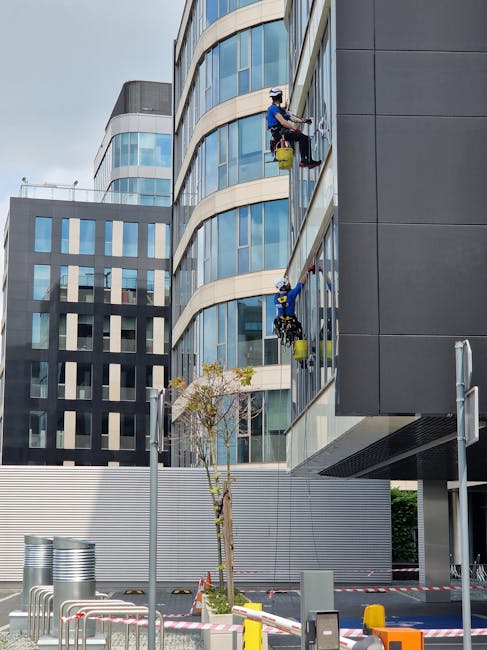
For glass-heavy offices or street-facing premises, clean windows matter more than vanity. Smears and water marks are the sort of thing people notice instantly, even if they do not mention it. A targeted window cleaning service is one of those small investments that quietly improves how the whole place feels.
Common Mistakes to Avoid
A lot of cleaning problems come from poor planning rather than poor cleaning. That is the honest truth.
- Choosing only on price: a very cheap quote can leave out important tasks, insurance, or reliability.
- Not defining the scope: "clean the office" is too vague if you want predictable results.
- Ignoring special surfaces: wood, vinyl, stone, carpet, and fabric all have different needs.
- Forgetting about communal areas: entrances and shared corridors shape the impression of the whole building.
- Skipping periodic deep cleans: regular maintenance is great, but it does not replace a proper reset now and then.
- Assuming all cleaners are the same: experience, communication, and consistency vary quite a lot.
Another mistake? Not checking what happens if something goes wrong. Accidents are rare, but they can happen. A spilt product, a broken item, or a missed area should be handled through a clear process. If you want reassurance on that side, it is worth looking at a provider's insurance and safety information before you commit.
And because offices are busy places, it is easy to forget about communications. If you need to raise a concern, you should know exactly how that gets handled. A visible complaints procedure is not glamorous, but it is a sign of a business that has thought things through.
Tools, Resources and Recommendations
You do not need to become a cleaning specialist to make a smart choice, but a few tools and reference points help a lot. Start with your own building map. Even a basic floor plan with notes on high-traffic zones can make conversations far easier.
Useful things to have ready include:
- a room list and approximate square footage, if known;
- a note of any sensitive equipment or restricted areas;
- details of opening hours and access arrangements;
- a list of recurring issues, such as bin overflow, dust, or carpet marks;
- any preferences around products, recycling, or waste handling.
If your office has carpets that are looking dull or holding onto traffic marks, it may help to combine routine maintenance with a dedicated commercial carpet cleaning service. That is especially useful in entranceways, corridors, and meeting rooms where the flooring gets more visual wear than people expect.
For businesses that care about waste handling and environmental practice, it is reasonable to ask about recycling and product choices too. A provider with a clear recycling and sustainability approach can help reduce avoidable waste without making the service awkward or slow.
If you are still comparing suppliers, pricing and quotes is the sensible place to start the conversation. Good quotes should explain what is included, what is optional, and how often the service is planned. Vague estimates tend to become annoying later. Nobody needs that.
Law, Compliance, Standards, or Best Practice
Office cleaning in the UK touches on everyday safety, employment practices, and building management rather than one single dramatic rulebook. The main practical point is simple: anyone working in a workplace should be operating safely, using appropriate methods, and respecting access, storage, and any site-specific requirements.
For offices, the best practice checklist usually includes:
- clear risk awareness around wet floors, cables, and public access;
- safe use and storage of cleaning products;
- attention to fire exits and shared access routes;
- reasonable hygiene control in kitchens and washrooms;
- insurance coverage and honest communication about limitations;
- respect for privacy where papers, screens, and personal items are involved.
It is also sensible to check a provider's policies before work begins. For example, a visible health and safety policy shows that the team has thought through how work is carried out, rather than just hoping for the best. That may sound dry, but in real life it is reassuring.
Contract terms matter too. Scope, access, cancellations, payment timing, and responsibilities should be clear. If you want a better feel for how a provider works, the terms and conditions page can help you understand the practical side of the arrangement.
One more thing: if your office is in a building with shared entrances or public-facing corridors, keeping those areas safe and tidy is part of normal good practice, not just a nice extra. It protects staff, visitors, and cleaners alike.
Options, Methods, or Comparison Table
Different offices need different levels of support. The table below gives a straightforward comparison of the most common Woking High Street office cleaning options.
| Option | Best for | Typical strengths | Watch-outs |
|---|---|---|---|
| Regular office cleaning | Busy offices with ongoing footfall | Consistent standards, fewer build-ups, easy to schedule | Needs a clear scope so nothing is missed |
| Deep cleaning | Spaces that need a reset or have been neglected | More detailed attention to corners, touchpoints, and hidden grime | Not a replacement for ongoing upkeep |
| One-off cleaning | Events, handovers, or seasonal refreshes | Flexible and useful when you need support quickly | Won't maintain cleanliness long term on its own |
| Commercial carpet cleaning | Offices with visible carpet wear | Helps restore appearance and remove embedded dirt | Needs drying time and careful scheduling |
| Window and glass cleaning | Street-facing or client-facing premises | Improves light, presentation, and overall impression | May need regular repetition depending on weather and traffic |
If your office has multiple cleaning needs, the best solution is often a blended one. For example, weekly regular cleaning plus quarterly carpet care and occasional deep cleaning can be more effective than one oversized service that tries to do everything at once. That said, simpler is good too if the premises are small. No need to overcomplicate things.
Case Study or Real-World Example
Picture a small professional office close to Woking High Street. It has a reception area, two meeting rooms, a tea point, toilets, and a carpeted corridor that sees a steady stream of wet shoes in the winter. The staff are tidy enough, but the day moves quickly. By Friday afternoon, the bins are full, fingerprints show on the glass partition, and the corridor has picked up the kind of dull look that builds slowly.
The office starts with regular cleaning three evenings a week. That handles the basics: bins, washrooms, kitchen surfaces, floors, and touchpoints. After a month or two, they add a deeper monthly clean for skirting boards, details around desks, and those neglected corners everyone forgets about. Then, because the corridor and meeting room carpet are starting to look flat, they book a specialist carpet refresh. Nothing dramatic. Just sensible maintenance.
What changes? Visitors stop noticing the same tired marks. Staff come in on Monday to a space that feels ready rather than half-finished. And perhaps most importantly, the manager stops dealing with little complaints that used to nibble away at the week. It is a small story, but a realistic one. Most offices do not need miracles. They need a plan that works.
If the office has chairs or soft furnishings that are beginning to look a little worn, a targeted service like sofa cleaning can also help refresh reception or breakout areas without replacing furniture early.
Practical Checklist
Use this checklist before you book or renew office cleaning support:
- Have you listed all areas that need cleaning, including shared spaces?
- Do you know which tasks are daily, weekly, monthly, or occasional?
- Have you identified any carpets, upholstery, or hard floors that need specialist care?
- Is access arranged so cleaning can happen without disrupting staff or visitors?
- Do you understand what is included in the quote?
- Have you checked insurance, safety, and complaint handling information?
- Are products, waste handling, and sustainability preferences agreed?
- Do you know how to review the first few cleans and adjust the plan if needed?
It helps to keep that list somewhere visible. Not because it is complicated, but because busy people forget things. Happens all the time.
Get a free quote today and see how much you can save.
Conclusion
The best Woking High Street office cleaning options are the ones that fit how your workplace actually runs. A busy client-facing office needs different support from a small back-office team, and a shared building has its own quirks as well. Once you look at the job in layers - routine cleaning, occasional deep cleaning, specialist floor or carpet care, and sensible compliance - the right choice becomes much clearer.
What you are really buying is peace of mind. A cleaner, calmer space. Fewer small distractions. Better first impressions. Less of that low-level office grime that somehow appears even when everyone insists they are careful.
And if you take one thing away from this guide, let it be this: choose a cleaning plan that is specific, repeatable, and realistic. That is where good results usually begin.
For more background on the company behind these services, you can also explore about us. If you are ready to talk through a tailored setup, the next step is simple enough.
Frequently Asked Questions
What are the main Woking High Street office cleaning options?
The main options usually include regular office cleaning, deep cleaning, one-off cleaning, and specialist services such as carpet or window cleaning. Many businesses use a mix rather than a single service.
How often should an office near Woking High Street be cleaned?
That depends on footfall, staff numbers, and how client-facing the space is. Busy offices often need several cleans a week, while smaller offices may be fine with a lighter routine and periodic deep cleaning.
Is a deep clean better than regular office cleaning?
Not really better - just different. Regular cleaning keeps the office under control, while deep cleaning resets neglected areas and handles built-up dirt. Most offices benefit from both at different times.
Can office cleaning be done outside working hours?
Yes, and that is often the easiest option. Early mornings, evenings, or quieter periods reduce disruption and make it simpler to clean shared spaces properly.
What should be included in an office cleaning quote?
A good quote should state the cleaning tasks, frequency, access arrangements, and any extras such as carpet or window cleaning. If something is important to you, it should be written down, plain and simple.
Do I need specialist cleaning for office carpets?
If carpets are heavily used, discoloured, or holding onto marks, specialist treatment is usually worth it. Routine vacuuming is good, but it will not remove embedded dirt on its own.
How do I compare office cleaning providers fairly?
Look at scope, reliability, insurance, communication, and the clarity of the quote. Price matters, of course, but the cheapest option is not always the best value.
What if my office also has shared corridors or entrances?
Then you should consider communal area cleaning as part of the plan. Shared spaces shape first impressions and often collect the most visible dirt.
Are cleaning products and safety important for office cleaning?
Yes. A professional provider should work safely, manage products sensibly, and have clear procedures in place. If safety matters to you, ask to see the provider's policy information before work begins.
Can I book office cleaning as a one-off service?
Absolutely. One-off cleaning is useful for events, post-works refreshes, handovers, or simply bringing a space back to a decent standard before starting a longer routine.
What areas of an office are most often forgotten?
Corners, skirting boards, under furniture, shared touchpoints, and the edges of kitchens and washrooms are commonly overlooked. They are not glamorous spots, but they matter more than people think.
How do I know if my office needs a deeper clean rather than a normal tidy?
If the space looks clean at a glance but still feels stale, dusty, or dull in the details, a deep clean may be the better choice. That usually shows up in carpets, corners, and high-touch surfaces.